
NICU Guide
NICU Equipment Explained
A simple guide to common machines, tubes, lights, and monitors you may see during your twins' NICU stay.
Important Disclaimer
This guide shares general information only. Every baby is different. Always ask your babies' NICU team to explain what your twins specifically need.
Having your twins in the NICU can feel overwhelming. The room may be full of machines, wires, tubes, lights, and alarms that you have never seen before.
The good news is that most NICU equipment has one clear purpose: to help your babies stay warm, breathe safely, eat, grow, and be monitored closely while they get stronger.
You do not have to understand everything on the first day. This guide explains some of the most common NICU equipment in plain English so the room feels a little less scary.
Quick Navigation
NICU Beds and Warmers
Incubator or Isolette
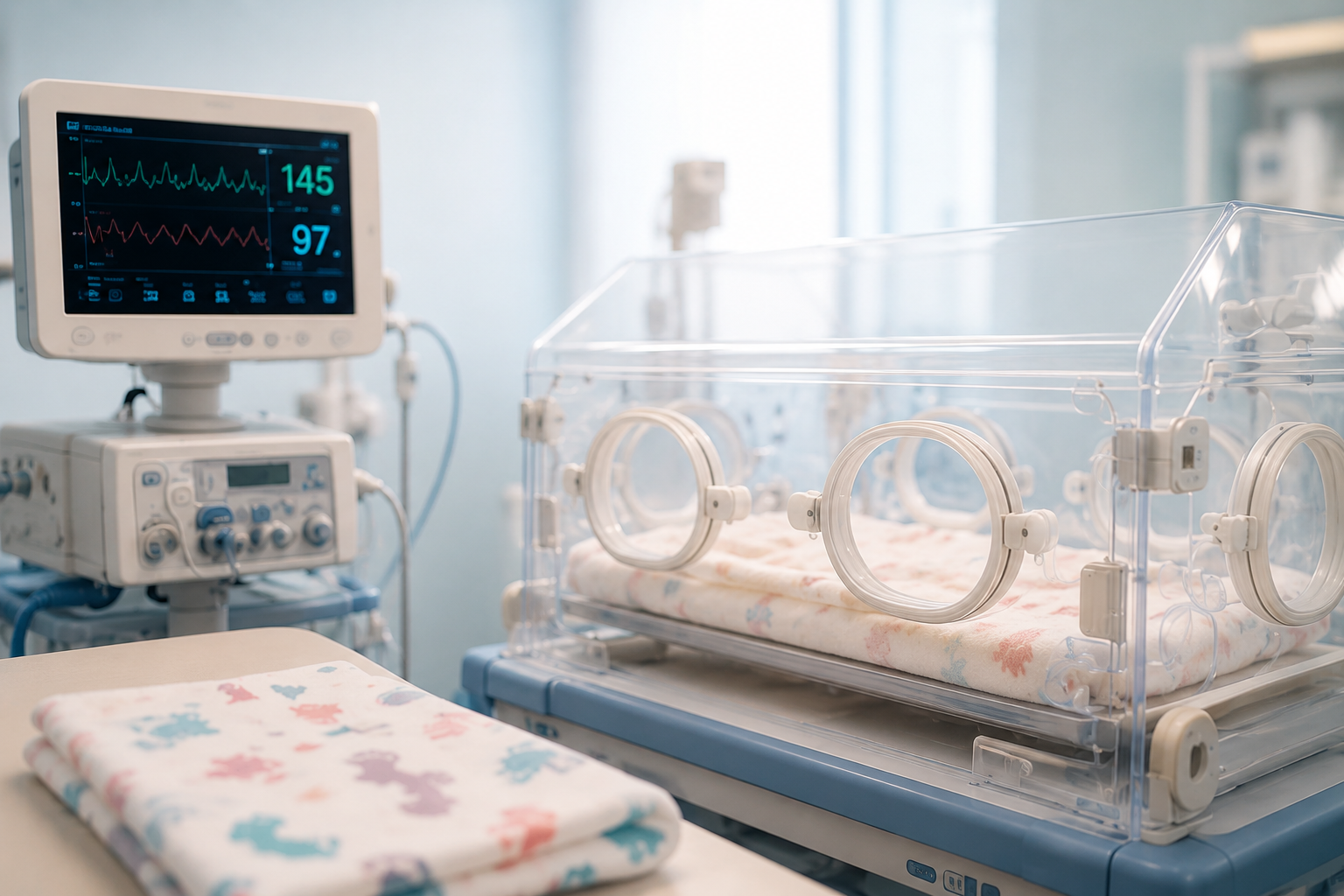
An incubator, often called an isolette, is a clear enclosed bed that helps keep premature babies warm. It can protect babies from germs and help control temperature and humidity.
It may look intimidating at first, but it is often used to help tiny babies conserve energy. When it is safe, parents can usually still touch, comfort, and participate in care through the openings.
Radiant Warmer
A radiant warmer is an open bed with a heater above it. It is often used right after birth or when babies need frequent care while staying warm.
Some babies move between a warmer, an isolette, and eventually an open crib as they become more stable and better able to maintain their temperature.
Breathing Support
Many premature babies need some breathing support while their lungs mature. Needing breathing help does not always mean something terrible is happening. Sometimes babies simply need time and support.
CPAP
CPAP stands for Continuous Positive Airway Pressure. It uses a mask or small prongs to help keep the airways open and support breathing.
High-Flow Nasal Cannula
A high-flow nasal cannula uses soft tubes in the nose to give warm air and sometimes extra oxygen.
Ventilator
A ventilator is a machine that helps babies breathe when they cannot do it well enough on their own. Some babies need this only temporarily while they grow stronger.
Monitors and Alarms
NICU monitors track things like heart rate, breathing, and oxygen levels. You may see small stickers or soft wraps on your baby's chest, hands, or feet.
The beeps and alarms can feel stressful. Sometimes an alarm means a baby needs attention. Other times it may happen because a sensor moved, a baby wiggled, or the monitor briefly lost its reading.
Nurses are used to interpreting these alarms. If you are unsure what a sound means, ask. You are allowed to understand what is happening around your babies.
Feeding Tubes
NG Tube or OG Tube
An NG tube goes through the nose into the stomach. An OG tube goes through the mouth into the stomach. Both can give milk safely while a baby is still learning to feed by mouth.
This can be very common for premature babies. Feeding takes coordination, energy, breathing control, and stamina. A feeding tube can help babies get the nutrition they need while they practice.
IV Lines
IV lines can be used to give fluids, nutrition, and medications. You may see a regular IV in the hand, foot, arm, or scalp.
PICC Line
A PICC line is a longer IV that can stay in place when a baby needs medications, fluids, or nutrition for a longer period of time.
Umbilical Catheter
An umbilical catheter is a line placed through the umbilical cord area shortly after birth. It can help the care team give fluids, medications, or draw labs without repeated needle sticks.
Phototherapy Lights
Phototherapy lights are special blue lights used to treat jaundice. Jaundice is common in newborns, especially premature babies.
During phototherapy, babies usually wear eye protection. The lights help their bodies break down bilirubin so it can leave the body more easily.
Equipment Can Look Scary, But It Does Not Define Your Baby
One of the hardest parts of walking into the NICU is seeing your tiny baby surrounded by machines, wires, and tubes. It can feel like the equipment is the first thing you notice.
Try to remember that the equipment is there to support your baby while they grow stronger. As your twins improve, you may begin to see fewer wires, fewer machines, and more opportunities for cuddles, diaper changes, feeding, and hands-on care.
Quick Tip for Parents
It is okay, and encouraged, to ask the NICU team questions.
Helpful Questions to Ask
- What is this machine doing for my baby?
- What does this alarm mean?
- Is this equipment temporary?
- What is the goal for today?
- What needs to happen before this can be removed?
You are part of your babies' care team. Asking questions does not make you difficult. It helps you understand your twins' care and feel more confident in the NICU.
Related Resources
Pair this guide with more Twin Mom Club NICU and pregnancy resources.
Twin NICU Terms Explained Hospital Bag Checklist for Twins Questions to Ask Your OB Free NICU PrintablesMedical Disclaimer
This content is for educational and informational purposes only and does not replace medical advice. Always ask your babies' NICU team for guidance about your babies' specific condition, treatment, equipment, and care plan.