Twin Pregnancy Guide
Twin Pregnancy Symptoms by Trimester
What is normal, what may feel different, and when it is time to call your healthcare provider.
Important Disclaimer
This guide shares general information and common experiences. It is not medical advice. Every pregnancy is unique. Always contact your OB, midwife, or healthcare provider if you have concerns about your symptoms.
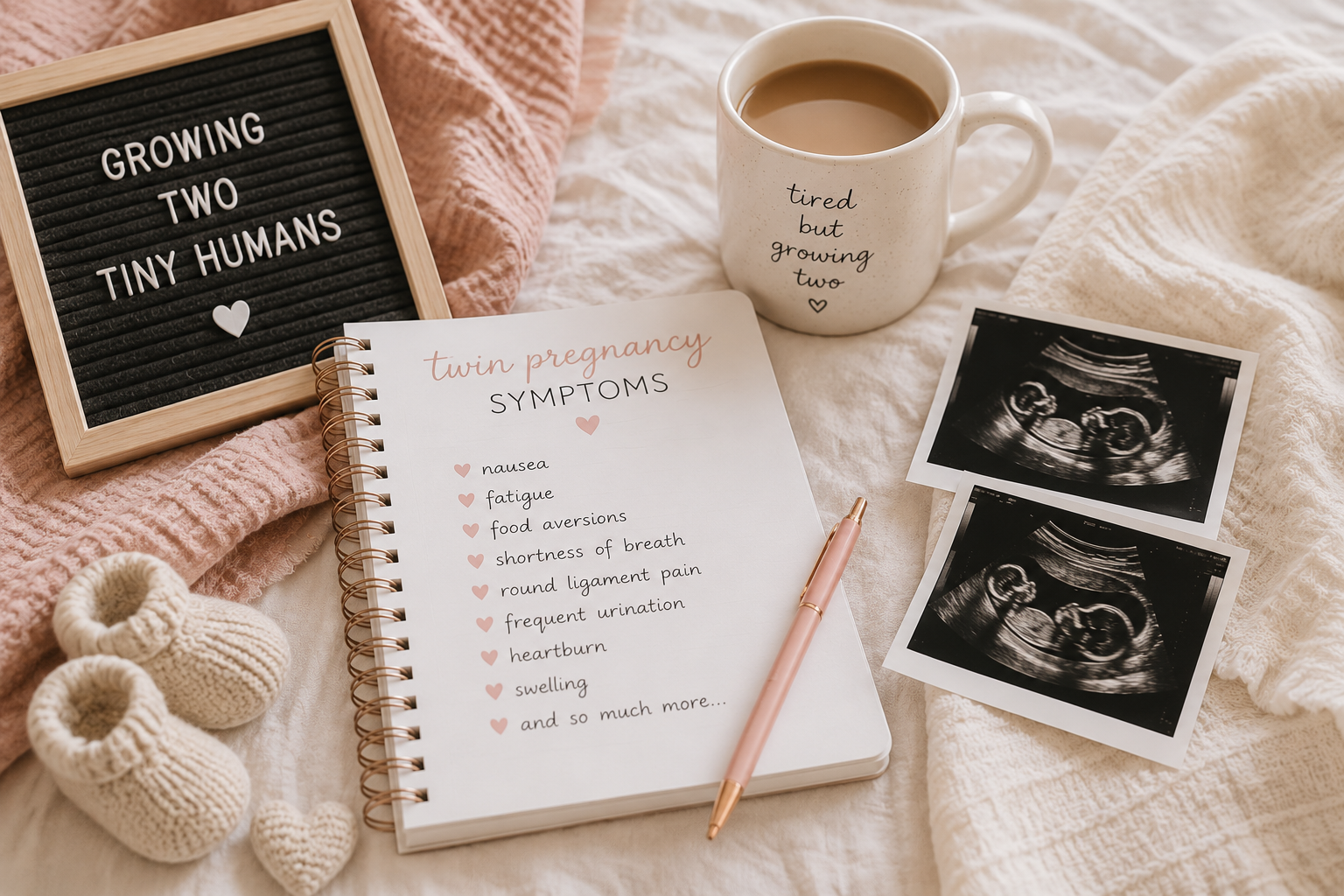
Twin pregnancy brings all the usual pregnancy symptoms. Then it adds its own twists.
Many moms are surprised by how much earlier, stronger, or simply different symptoms can feel when growing two babies instead of one.
As a registered nurse and twin mom, I quickly learned that twin pregnancy often follows its own rules. What counts as normal may show up earlier, feel stronger, or simply feel different than it does during a singleton pregnancy.
This trimester-by-trimester guide covers common symptoms, how twins can change them, and when it is time to call your healthcare provider.
Quick Navigation
First Trimester: Weeks 1 to 12
The first trimester can feel intense with twins. Some symptoms may show up early, feel stronger, or hit before you even have time to process that you are pregnant with two babies.
Common Pregnancy Symptoms
- Nausea or morning sickness
- Extreme fatigue
- Breast tenderness
- Frequent urination
- Mood swings
- Food aversions or cravings
How Twins Can Feel Different
With twins, these symptoms can feel amplified. Nausea may hit harder and earlier because hormone levels often rise quickly. Exhaustion can also feel overwhelming as your body works overtime to support two babies and, depending on your pregnancy, two placentas.
Food aversions, smell sensitivity, and cravings may also feel stronger or more unpredictable. Basically, your body may decide that crackers are safe, chicken is offensive, and your favorite coffee suddenly smells like betrayal.
Helpful Tips
- Eat small meals throughout the day, even if you do not feel very hungry.
- Keep easy snacks near your bed, purse, car, or couch.
- Rest whenever possible. Your body is doing an incredible amount of work.
- Stay hydrated and ask your provider about safe nausea options.
- Keep a simple symptom journal to notice patterns before appointments.
Second Trimester: Weeks 13 to 26
For some twin moms, the second trimester brings a little more energy. For others, it brings a belly that seems to grow overnight and a body that has opinions about every position.
Common Pregnancy Symptoms
- Energy may improve
- A rapidly growing belly
- Round ligament pain
- Heartburn
- Back, hip, or pelvic discomfort
- Braxton Hicks contractions
How Twins Can Feel Different
Twin pregnancies often begin measuring ahead of schedule. Many moms notice they show earlier than expected. Shortness of breath and heartburn can start sooner because of extra pressure from two growing babies.
Back, hip, and pelvic discomfort may become more noticeable as your body adjusts to extra weight, shifting posture, and pregnancy hormones. Braxton Hicks contractions can also happen more often or feel stronger.
Helpful Tips
- Ask your provider if a maternity belt or belly band is appropriate.
- Try gentle swimming, stretching, walking, or prenatal yoga if approved.
- Use pillows to support side sleeping.
- Keep up with ultrasounds and recommended monitoring appointments.
- Write down questions before visits so pregnancy brain does not steal them.
Third Trimester: Weeks 27 to Delivery
The third trimester of a twin pregnancy can feel like the final boss level. Everything feels bigger, heavier, tighter, and somehow your bladder still thinks it needs to participate every 12 minutes.
Common Pregnancy Symptoms
- Swelling
- Back pain
- Frequent bathroom trips
- Braxton Hicks contractions
- Trouble sleeping
- Shortness of breath
- Fatigue returning
How Twins Can Feel Different
With twins, everything can feel bigger and heavier. Swelling, shortness of breath, pelvic pressure, and returning fatigue often show up strongly. Preterm labor signs or contractions may also appear earlier than they might in a singleton pregnancy.
Sleep can become harder with two babies moving, extra pressure, bathroom trips, heartburn, and general discomfort. Your provider may also watch more closely for concerns such as preeclampsia, gestational diabetes, growth differences, or fluid level changes.
Helpful Tips
- Elevate your feet when resting.
- Stay on schedule with appointments and ultrasounds.
- Pack your hospital bag earlier than you think you need to.
- Accept help with errands, meals, cleaning, and childcare.
- Call your provider if contractions, swelling, headaches, or movement changes concern you.
When to Call Your Doctor
Call your OB, midwife, or healthcare provider right away if you notice symptoms such as decreased fetal movement, severe headache, vision changes, sudden swelling, bleeding, leaking fluid, severe abdominal pain, chest pain, trouble breathing, or regular contractions before 37 weeks.
You are not being dramatic. You are being careful. Twin pregnancy deserves extra attention.
General Tips for Twin Pregnancy Symptoms
Track your symptoms and bring notes to appointments. Use a list of questions for twin OB visits so you do not forget anything important when you are tired, rushed, or overwhelmed.
Self-care makes a real difference. Focus on rest, nutrition, hydration, light movement when cleared, and emotional support. You are growing two babies. It is okay to need more help than a typical singleton pregnancy may require.
You Are Not Alone
Twin pregnancy can feel overwhelming some days. It can also feel exciting and powerful. The symptoms are real, but so is your strength.
Many twin moms say the hard parts made them more resilient in the end. Trust your body. Trust your care team. Reach out when you need support.
Related Resources
Pair this guide with more Twin Mom Club resources.
Questions to Ask Your OB by Trimester What to Pack in Your Hospital Bag for Twins What No One Told Me About Twin Pregnancy Free Twin Pregnancy PrintablesMedical Disclaimer
This content is for informational purposes only and is based on general experiences. It does not replace professional medical advice. Consult your healthcare provider for personalized guidance.